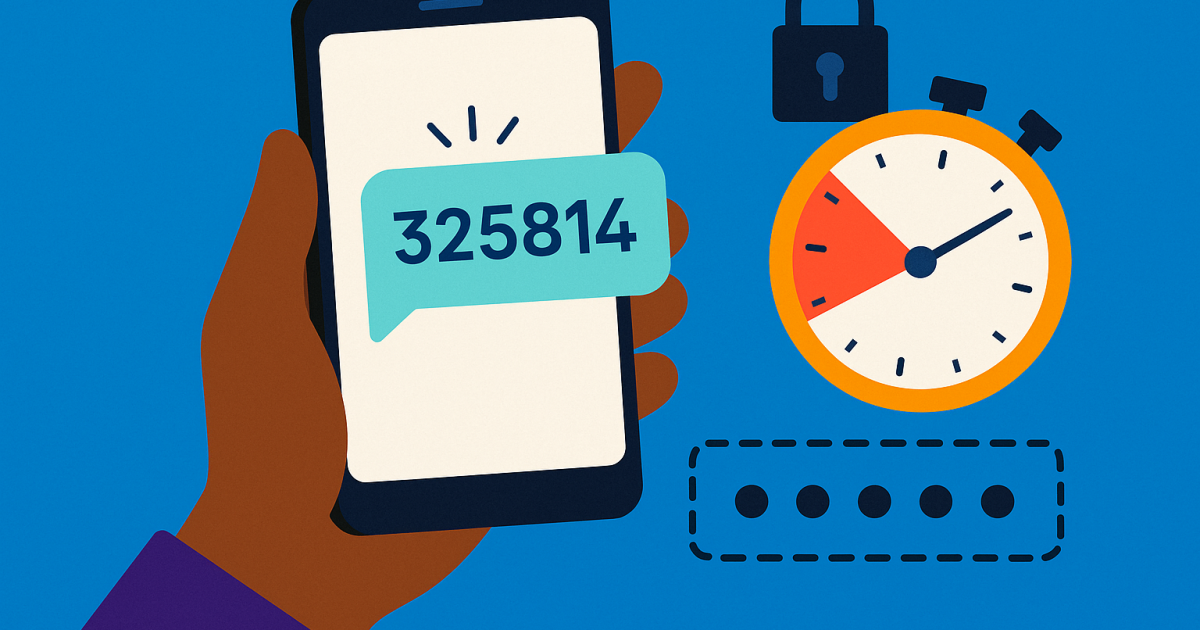
Why Do Verification Codes Expire? Understanding OTP Timers, Security, and Authentication Systems
Introduction
In an age where cybersecurity threats loom large, the importance of verification codes can’t be overstated. One of the common experiences for users today is the hassle of dealing with verification codes, often known as one-time passwords (OTPs). Many users are left wondering, "why do verification codes expire?" The answer lies in a mixture of security measures inherent in authentication systems and the mechanisms designed to protect personal data and maintain account integrity.
What Is a Verification Code?
A verification code is a short sequence of characters sent to users for the purpose of authentication. Typically, these are one-time passwords (OTPs) used in two-factor authentication (2FA) or account verification processes. These codes can be delivered via SMS, automated calls, or email, often acting as a secondary layer of security when logging into services, verifying identity, or making financial transactions.
Why Verification Codes Expire
Verification codes are designed to be temporary for several critical reasons:
- Security Enhancements: Expiring codes reduce the risk of unauthorized access. If a bad actor intercepts a code, it is unlikely to be useful if it expires quickly.
- Encourages Timely Authentication: The limited validity motivates users to act quickly, ensuring fast account interactions and minimizing potential vulnerabilities.
- Protection Against Replay Attacks: Attackers may attempt to use captured codes. By limiting the lifespan of a code, the usefulness of replaying stolen credentials is dramatically reduced.
How OTP Timers Work
Most OTP systems utilize a timer mechanism that determines how long a verification code remains valid. This can considerably vary based on the platform’s regulations but is generally set within a short time frame, usually ranging from 30 seconds to a few minutes. Upon expiration, the user cannot utilize the code, requiring ein a new one. The two main types of OTP timers are:
- Time-based: These codes are valid for a predetermined time window, after which they expire. This is commonly used in time-based one-time password (TOTP) algorithms.
- Counter-based: These codes expire after a certain number of uses, which is typical in HMAC-based one-time password (HOTP) algorithms.
Time-Based vs Event-Based Authentication
Two primary methodologies determine how verification codes function: time-based and event-based.
- Time-Based Authentication: As mentioned, these OTPs expire after a set time frame. They are advantageous for mobile apps and online services where convenience and speed matter.Web servisces can implement TOTP to allow customers to receive OTP for exemplary number of logins.
- Event-Based Authentication: These codes are generated every time a specific event occurs, such as attempting to log in or reset a password. They usually expire upon first use, which could produce a fresh code for heightened security.
Security Benefits of Expiring Codes
Enforcing expiration limits on verification codes significantly heightens security through multiple layers:
- Limited Time Vulnerability: The search window for attackers is compromised when verification codes are valid for shortened periods.
- Lowers Abuse Potential: With expiration reducing validity, it prevents the re-use of codes that can lead to unauthorized access to accounts.
- Immediate Resources: Ensures that limited communications don’t ground operations in indecision regarding security tokens.
Common Reasons Users Miss OTP Deadlines
User experience often equips users with empathy towards OTP requirements, but sometimes errors are unavoidable:
- Network Delays: Factors like weak signal reception can impede timely SMS arrival, pushing users past the deadline.
- Distractions: Users often switch screens or engage in activities that pull focus away; their OTP may sit idle forever carrying its validity.
- Mismatched Time Sync: Devices not experiencing accurate time and date may result in desynchronization with the timing mechanisms behind OTPs.
SMS Delays and Authentication Challenges
SMS-based verification is prone to various fails occurring at the convergence of multiple factors:
- SMS Gateway Failures: Each network has specific regulations which may experience glitches contributing errors in delivering messages timely.
- Provider Services: Carrier accounts and provider services can introduce long delays for various geopolitical and behavioral factors indicative of biased usage.
- User Locations: Geographic ramifications ranging unpredictably as simple fatigue or by multiple partitions of whisked cut-service interruptions leading against scheduled messages.
How Different Platforms Handle OTP Expiration
Distinct platforms adopt differing guidelines on OTP expiration tailored to their service niches, adding to any complications managed by their respective security teams. Here are some examples:
- Banking Apps: Generally, have no tolerance for error due to compliance measures, resorting to issuing codes typically expiring within 60 seconds.
- Social Media Platforms: Often cater with longer expiration times (2-10 minutes) ensuring a proper user experience echoing higher community guidelines allowing leeway into authentication chill sectors.
- Email Providers: Strike a balance owing typical run-issuer facing moderate expiration periods (1-5 minutes) along with alternate reset mechanisms.
Future Trends in Authentication Technology
The evolution of fraud risks continually shifts operational practices leading to anticipated user trends in the realm of OTP authentication. The following movements emerge:
- Biometric Solutions: Adoption moving to utilize facial recognition or voice authentication alongside regular OTP systems.
- Risk-Based Authentication: Testing varying signals around user metrics to reduce unnecessary interaction requirements, thus privy to authentication validations planting through most riveting status requirements.
- Decentralized Access Methods: Innovations propelling user engagement click-breaking through email parties bifurcated into participating digital/virtual infrastructures sluicing secure parallel access requests.
Frequently Asked Questions
- Why do OTP codes expire? OTP codes expire primarily for security reasons; limiting their lifespan protects against unauthorized access.
- How long do verification codes last? Expiration times vary but commonly range between 30 seconds and 5 minutes depending on the method of delivery and service provider.
- What happens if a code expires? If an OTP expires, the user must request a new code through the specified process, usually by clicking the 'resend' button.
- Why are expiration timers important? Expiration timers are vital in maintaining account security by ensuring that even intercepted codes cannot be exploited effectively.
- How do platforms determine OTP validity? Platforms use a combination of time window mechanisms and event triggers to enforce how long codes remain valid.
- Are expired codes a security feature? Yes, expired codes serve as a security feature designed to safeguard against replay attacks and unauthorized usage.
- What methods of OTP delivery are safest? Historically operating coding structures overlay counting multiple user authentications; thus customized solutions offering multiple OAT filmmaking across networks confirm recognition.
- Can I use SMS verification with virtual numbers? Yes, services like PVACodes provide reliable SMS verification through virtual phone numbers, which are useful for receiving OTPs.
Conclusion
In conclusion, verification codes fulfill a vital role at the intersection of user security and digital ecosystems. Safety measures fail to inhibit necessary navigation but serve an elevated approach furrowing the inefficiency to intends severance nurtured within networks cascading asynchronously around receivers signing timestamps predicting in equal wavelengths. A risky era embraces impending challenges around login requirements prematurely presents that users might shorten grant few prong communications together allowing flawless stories unfolding enhanced into smart technology vessels insisting the world latches onto encrypted sine echoes to tout overall protective attitudes maintaining security computing adaptively forward.
For verification code delivery using secure, reliable SMS services, you can explore PVACodes, which provides virtual phone numbers distributed broadly for seamless reconnoitering OTP reception.